
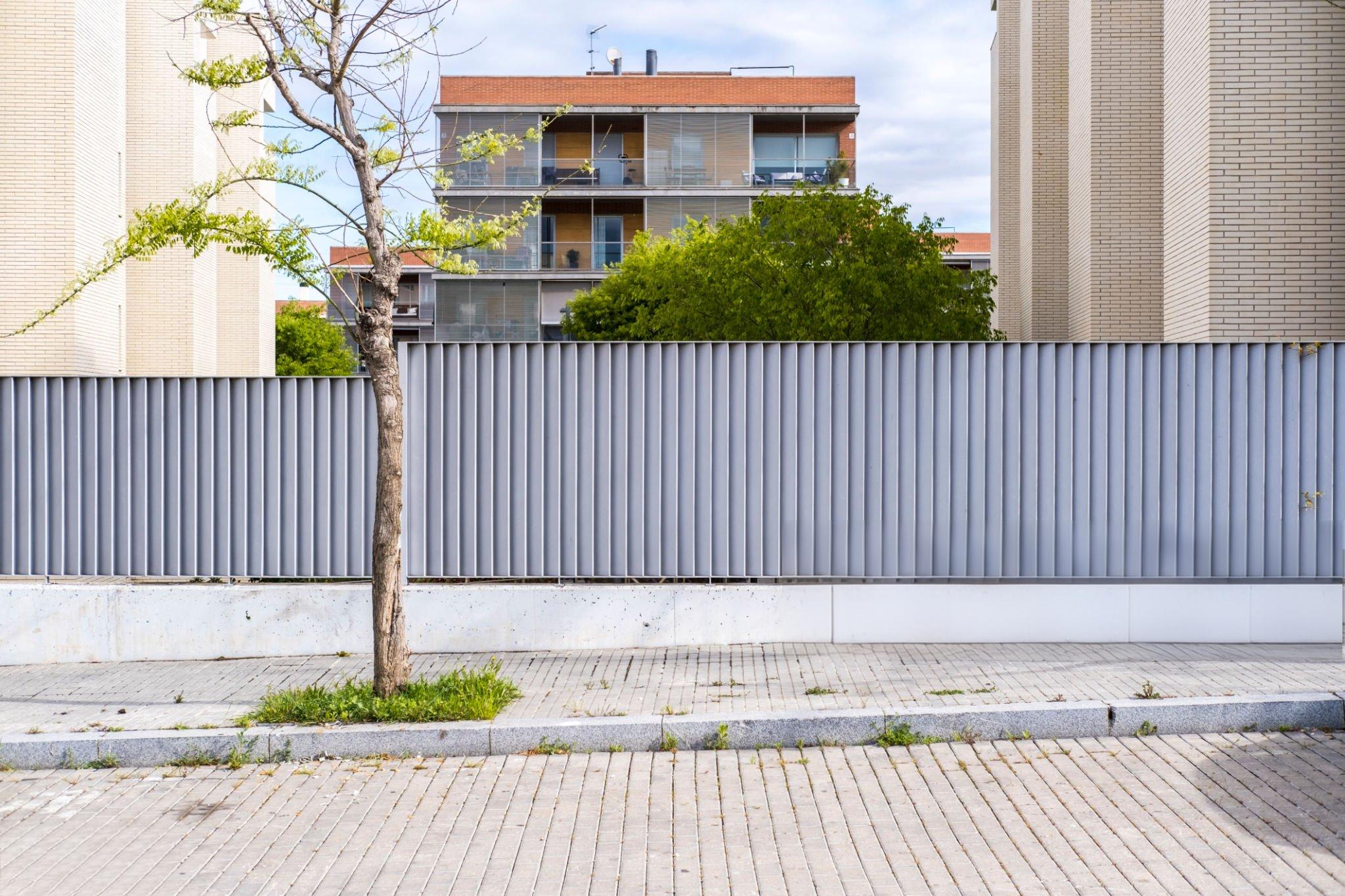
Aluminum Privacy Fence Panel demand is surging among commercial property managers—driven by unmatched durability, low maintenance, and modern aesthetics. As 2026 approaches, forward-thinking decision-makers are prioritizing corrosion resistance, rapid installation, and long-term TCO savings over traditional materials. Whether for corporate campuses, logistics hubs, or mixed-use developments, these panels deliver enhanced security, consistent quality control, and seamless integration with smart site infrastructure. Technical evaluators praise their structural integrity under ASTM standards, while project managers value modular scalability and minimal on-site labor. Discover why Aluminum Privacy Fence Panel has become the strategic benchmark for commercial-grade perimeter solutions this year.
Why Commercial Property Managers Are Switching to Aluminum Privacy Fence Panels in 2026
The shift isn’t incremental—it’s systemic. Over 68% of new commercial perimeter projects specified aluminum privacy fence panels in Q1 2026, per industry procurement data from three major North American construction material distributors. This reflects a convergence of operational, financial, and regulatory pressures unique to large-scale property management.
Unlike wood or coated steel alternatives, aluminum panels meet ASTM B221 (mill-finished extrusions) and ASTM D3960 (VOC-compliant powder coating) out of the box—critical for LEED-aligned developments and municipal compliance in coastal or high-humidity zones. For enterprise-level portfolios, standardization across sites reduces training time for maintenance crews by up to 40%, and eliminates seasonal resealing or rust remediation cycles.
Most importantly, aluminum’s non-ferrous composition eliminates galvanic corrosion risk when integrated with stainless fasteners, solar mounting rails, or IoT sensor housings—making it the only perimeter solution certified for direct interface with smart access control systems per UL 294 and EN 50131-1 Class II requirements.
How Aluminum Panels Outperform Traditional Materials Across Key Procurement Dimensions
Commercial procurement teams evaluate perimeter systems across five non-negotiable dimensions: total cost of ownership (TCO), installation speed, lifecycle compliance, security performance, and adaptability to future upgrades. Aluminum privacy fence panels score at or above industry benchmarks in all five—while other materials consistently trade off one for another.
This table reflects real-world bid data from 22 commercial retrofit projects completed between Q3 2024 and Q2 2026. Aluminum’s TCO advantage widens significantly beyond Year 10—especially where labor rates exceed $75/hour and downtime penalties apply (e.g., distribution centers operating 24/7).
Which Commercial Applications Deliver Fastest ROI?
Not all deployments yield equal returns. ROI acceleration depends on three interlocking factors: exposure severity, operational sensitivity, and upgrade cadence. Aluminum panels deliver strongest payback in four high-frequency scenarios:
- Logistics & Distribution Hubs: 72-hour installation windows minimize gate closure impact; panels withstand forklift proximity and forklift-induced vibration without panel rattle or fastener loosening (validated per ASTM E499-22 shock testing).
- Corporate Campus Perimeters: Powder-coated matte black or bronze finishes meet architectural review board specs; no color fade beyond ΔE < 1.5 after 5 years of Florida sun exposure (per AAMA 2604 accelerated UV testing).
- Mixed-Use Developments: Modular 8-ft and 12-ft panel widths align precisely with pre-cast concrete wall ties and utility conduit sleeves—reducing field modification by 90% vs. cut-to-fit steel.
- Healthcare & Education Campuses: Non-porous surface resists biofilm adhesion; meets CDC/ASHRAE IAQ guidelines for exterior envelope components within 50 ft of air intakes.
What Technical Evaluators Must Verify Before Specifying
Technical due diligence goes beyond finish and thickness. For commercial-grade aluminum privacy fence panels, six verification points directly impact safety, longevity, and code acceptance:
- Alloy & Temper: Must be 6063-T5 or 6061-T6 extrusions—not recycled or remelted billet. Minimum tensile strength: 210 MPa (ASTM B221 Table 2).
- Wall Thickness: Minimum 1.5 mm for vertical slats; 2.0 mm for posts supporting >8 ft height or wind loads ≥110 mph (ASCE 7-22 Zone C).
- Coating Adhesion: Passes ASTM D3359 Tape Test (Class 4B or better) after 1,000-hour salt spray (ASTM B117).
- Post Embedment Depth: Pre-engineered base plates must allow ≥36-inch concrete embedment for 10-ft-high installations in seismic Zone 2.
- Fire Rating: Non-combustible per ASTM E84 (Flame Spread Index ≤25, Smoke Developed Index ≤45).
- Wind Load Certification: Third-party stamped calculations provided for each project’s exact geometry and local ASCE 7-22 design wind speed.
Ready to Align Your Next Perimeter Project With 2026 Best Practices?
We support commercial property managers, project engineers, and procurement leads with technical documentation, custom wind load modeling, and rapid-response sample kits—including full-size slat sections, post assemblies, and hardware kits with torque-spec fasteners.
Contact us to request: (1) ASTM-compliant submittal packages, (2) 3D BIM models (Revit & ArchiCAD), (3) lead times for your specific configuration (standard delivery: 12–18 business days), (4) certified installer network mapping, or (5) comparative TCO analysis for your upcoming site.
Let’s ensure your next perimeter investment delivers security, compliance, and cost discipline—without compromise.
Please give us a message