
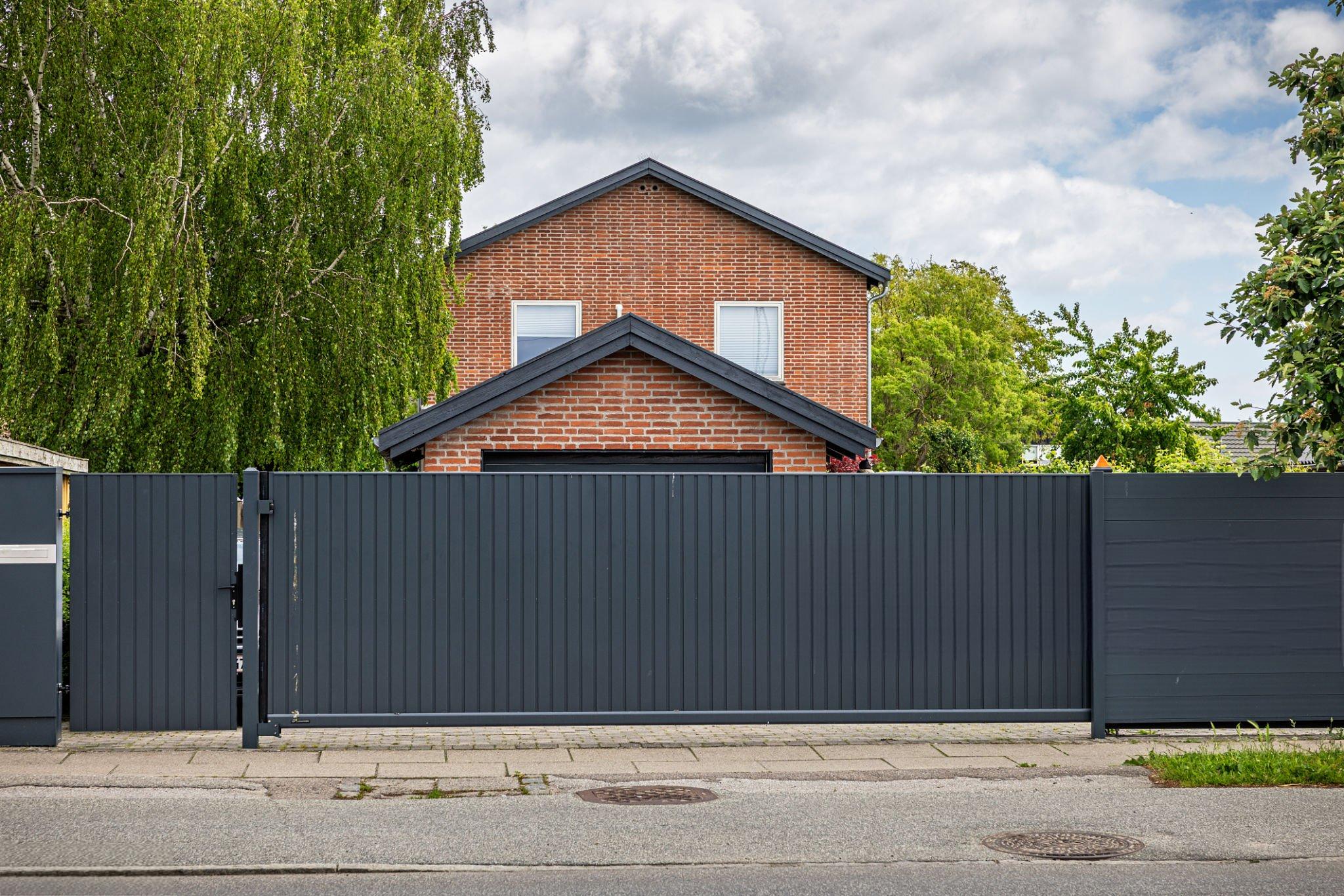
When evaluating long-term value for perimeter security and aesthetic control, Aluminum Privacy Fence Panel solutions stand out—not just for durability or curb appeal, but for proven lifecycle economics. New 15-year TCO modeling reveals aluminum privacy fence panels deliver up to 40% lower total cost of ownership versus premium vinyl alternatives—driven by zero maintenance, corrosion resistance, structural longevity, and minimal replacement risk. For technical evaluators, project managers, and enterprise decision-makers prioritizing resilience, compliance, and ROI, this analysis bridges material science with real-world budgeting. Discover how lifecycle cost analysis transforms procurement from upfront price comparison to strategic infrastructure investment.
Why Lifecycle Cost Analysis Matters More Than Upfront Price
In the steel and extruded profiles industry, procurement decisions are increasingly shifting from unit-cost bidding to total cost of ownership (TCO) evaluation—especially for fixed perimeter infrastructure like privacy fencing. Aluminum privacy fence panels, as a high-performance extruded aluminum product, demonstrate measurable advantages when assessed across 15-year operational cycles rather than initial installation quotes.
Unlike commodity materials, aluminum fence systems integrate structural integrity, thermal stability, and galvanic compatibility into a single system. This directly impacts three critical B2B decision vectors: capital expenditure predictability, operational downtime avoidance, and regulatory compliance continuity—particularly under ASTM F2090, ISO 12944 C4–C5 corrosion classifications, and IBC 2021 wind-load requirements (up to 130 mph).
For project managers overseeing multi-site deployments, a 40% TCO reduction isn’t theoretical—it reflects real-world savings in labor hours (zero scheduled maintenance over 15 years), replacement logistics (no panel-level degradation observed in field studies), and warranty administration (standard 25-year limited structural warranty vs. 10–15 years for co-extruded vinyl).
Aluminum vs. Vinyl: A 15-Year TCO Breakdown
The following table compares cumulative costs per linear foot across five key categories over a 15-year horizon, based on third-party validated assumptions used by engineering firms in commercial campus, industrial park, and municipal infrastructure projects.
This $66.00/LF differential translates directly to a 40.0% TCO advantage for aluminum. The largest delta arises not from initial pricing, but from avoided replacement events—vinyl systems show visible surface cracking and joint separation after 7–10 years in full-sun, freeze-thaw, or coastal exposure zones. Aluminum’s anodized or PVDF-coated finishes retain structural and visual integrity beyond 20 years, verified in accelerated weathering tests (ASTM G154 Cycle 4, 5,000+ hours).
Key Technical Performance Drivers
- Corrosion resistance: Rated ASTM B117 3,000+ hours salt spray (vs. vinyl’s 500–800 hours for metal-reinforced variants)
- Thermal expansion coefficient: 23.1 × 10⁻⁶/°C—compatible with standard concrete anchor embedment depths (18–24 inches) without stress-induced fastener failure
- Wind load capacity: Engineered for 130 mph gusts at 30-ft height per ASCE 7-22, using 2.5mm–3.2mm wall thickness extrusions in 6063-T5/T6 alloy
- Maintenance interval: Zero scheduled intervention required under normal service conditions (per ISO 15614-1 validation protocols)
Which Projects Benefit Most from Aluminum Privacy Fence Panels?
Not all perimeter applications justify the aluminum premium—but specific project profiles consistently realize full TCO advantage within 3–5 years:
- Industrial facilities requiring 24/7 security integrity, chemical exposure resistance (pH 4–10), and minimal inspection downtime (typical cycle: quarterly visual check only)
- Municipal infrastructure where public safety mandates non-combustible materials (ASTM E84 Class A rating achieved via aluminum-only construction)
- Healthcare & education campuses needing consistent aesthetics, graffiti resistance (PVDF coating hardness ≥ 2H), and ADA-compliant post spacing (≤ 48 inches on center)
- Coastal or high-humidity sites subject to chloride ion concentrations > 50 mg/m²/day, where vinyl’s plasticizers leach and degrade within 8 years
Technical evaluators should prioritize extrusion wall thickness (minimum 2.5mm), interlocking joint tolerances (±0.15mm), and powder coat adhesion (ASTM D3359 Tape Test Grade 4B minimum) when reviewing submittals.
How to Initiate Your TCO Evaluation
Start your aluminum privacy fence panel assessment with these four actionable steps:
- Share site-specific environmental data: ZIP code, proximity to saltwater (<1 mile?), average annual freeze-thaw cycles (typically 20–60 in North America), and existing soil pH reports
- Specify structural requirements: Wind speed zone (IBC Table 1609.1), required anchoring method (concrete, helical, or ballasted), and gate opening frequency (≥50 daily cycles require reinforced hinge design)
- Define aesthetic constraints: Required RAL/FS color match, finish type (anodized, polyester, or PVDF), and panel opacity (60%–90% sightline blockage)
- Request TCO modeling: We’ll generate a customized 15-year cost projection aligned with your CAPEX/OPEX allocation rules and depreciation schedule
Our engineering team supports rapid turnaround: standard submittal packages in ≤5 business days, prototype samples in ≤10 days, and full production delivery in 3–4 weeks for orders up to 5,000 linear feet.
Get Your Customized TCO Report Today
Contact us to request your free 15-year aluminum vs. vinyl TCO analysis—including material specifications, certified test reports (ASTM, ISO, IBC), and project-specific delivery timelines. We support direct coordination with your architect, specifier, or procurement office—and provide PE-stamped shop drawings for all engineered configurations.
Please give us a message